
This article provides an in-depth analysis of the world’s leading tact switch manufacturers and suppliers, based on industry insights, and offers a systematic selection strategy to help you accurately locate reliable sources within the global supply chain.
In the human-machine interface of electronic devices, the tactile switch (Tact Switch) plays a crucial role. It is not only the physical contact point for user input but also directly affects the product’s operational feel, reliability, and overall quality.
From remote controls and game controllers in consumer electronics to control panels in industrial equipment and medical instruments, a high-quality tactile switch is fundamental to ensuring the long-term stable operation of a product. Faced with numerous global suppliers, how to identify and choose the most suitable partner for a project becomes a key challenge for engineers and procurement specialists.
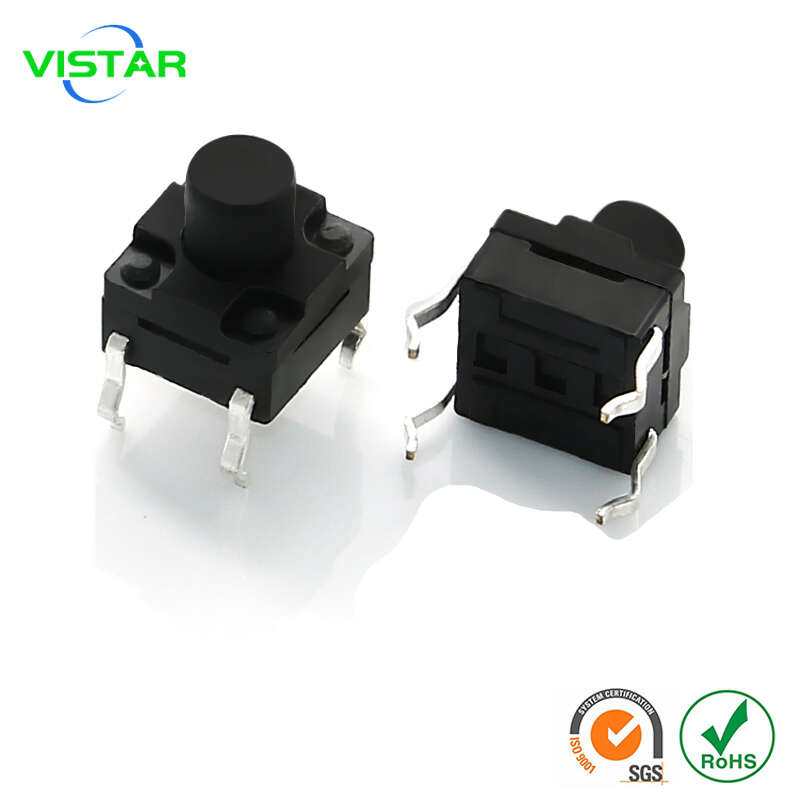
I. Mapping the Global Ecosystem of Top Tact Switch Manufacturers and Core Suppliers
The tactile switch market is composed of a few technology leaders, large-scale manufacturers, and specialized suppliers, forming a multi-layered, complementary supply ecosystem.
1. Technology Leaders and Standard-Definers
Manufacturers in this tier are renowned for their profound technical expertise, high product consistency, and leadership in frontier trends. They are the preferred choice for high-end and critical applications.
- Omron (Japan): A global benchmark for electromechanical components, Omron’s tactile switches (e.g., the B3F series) are famous for their exceptional reliability, precise tactile feel, and globally consistent, high-quality. Their product range covers standard, ultra-low profile, and sealed types, widely used in automotive electronics, industrial control, and high-end consumer electronics. They set the industry standard for “zero-defect” requirements.
- ALPS ALPINE (Japan): Known for its superior tactile feedback and long lifespan. Their switches offer a rich variety of actuation forces (from very light to heavy press), travel options, and can be customized for unique click sounds. They are highly favored in high-end audio equipment, professional controllers, and automotive Human-Machine Interfaces (HMI).
- Panasonic (Japan): Leveraging its strong electronics manufacturing background, Panasonic offers cost-effective and consistently high-quality tactile switches across a full range. Their products provide a good balance of durability and environmental adaptability, making them a reliable choice for large-volume procurement in consumer electronics, home appliances, and general industrial applications.
2. Scale and Specialized Application Experts
These suppliers have built strong competitiveness in specific fields or through scaled manufacturing, offering valuable alternatives.
- C&K (USA): As a globally recognized switch specialist, C&K’s tactile switches are known for their robustness and high customizability. Their products can withstand harsh environments and offer various terminal options, sealing grades, and actuator types, making them particularly suitable for industrial, aerospace, and outdoor equipment.
- TE Connectivity (USA): With the scale and technological integration capabilities of its connector empire, TE provides a wide range of tactile switch solutions from standard to high-performance. They exhibit synergistic advantages, especially in complex projects requiring systematic design integration with other interconnect components.

Looking beyond standard solutions from large suppliers? Vistar Electronics offers a compelling partnership focused on agility, quality, and value. We pride ourselves on our fast response times, consistent product reliability, and cost-effective pricing. Serving global clients with dedication is at the heart of our mission, as we strive to build trustworthy and long-term collaborative relationships.
II. In-Depth Analysis of Core Selection Dimensions and Technical Parameters
Selecting a tactile switch requires looking beyond brands to deeply evaluate the following core technical and performance parameters:
| Selection Dimension | Key Parameters | Explanation and Impact |
|---|---|---|
| Electrical Performance | Rated Current/Voltage, Contact Resistance | Determines the switch’s load capacity and signal loss. Must meet circuit design requirements with a safety margin. |
| Mechanical Performance | Actuation Force, Travel, Tactile Feel, Lifecycle | Actuation Force (e.g., 160gf, 260gf) affects hand feel; Travel impacts response speed; Tactile Feel (crisp or soft) relates to user experience; Lifecycle (typically 50k to 1M cycles) directly correlates to product durability. |
| Environmental Endurance | Protection Rating (IP), Operating Temperature, Solder Heat Resistance | IP Rating (e.g., IP67) for dust/water resistance; Wide Temperature Range (e.g., -40℃~85℃) for harsh environments; Solder Heat Resistance ensures performance remains unchanged after reflow soldering. |
| Physical Characteristics | Size, Mounting Style, Terminal Type, Actuator Style | Must perfectly match PCB layout, panel cutouts, and aesthetic design. Surface Mount (SMT) has become the mainstream. |
III. Strategic Selection Guide: From Requirements to Decision
To make the best decision, follow this systematic path:
- Define the Application Scenario and Priorities: First, define the switch’s “mission.” Is it for a frequently operated industrial controller (where lifecycle and reliability are paramount), a consumer electronic product pursuing ultimate tactile feel (where feel and sound are key), or a medical device exposed to the outdoors (where sealing and wide temperature range are core)? The scenario determines the weighting.
- Benchmark Technical Parameters and Initial Screening: Based on the scenario requirements, use key parameters (e.g., lifecycle ≥500k cycles, IP67, actuation force 260gf±30gf) as filters to conduct an initial screening of candidate suppliers’ catalogs, narrowing down the options.
- Evaluation Beyond the Datasheet:
- Sample Testing: Always request samples for hands-on evaluation of tactile feel, sound testing, and simple validation of lifecycle and environmental endurance. Data is the foundation, but actual experience is key.
- Supply Chain and Support Capabilities: Evaluate the supplier’s delivery stability, Minimum Order Quantity (MOQ), technical support responsiveness, and ability to handle customization needs. Supply chain resilience is crucial in the current global landscape.
- Cost vs. Value Trade-off: Adopt a Total Cost of Ownership (TCO) perspective. A switch with a slightly higher unit price but double the lifespan and an extremely low failure rate offers far greater long-term value than the initial savings from a lower-cost component.
IV. Conclusion and Outlook
Within the global electronics manufacturing network, choosing a partner for tactile switches is a comprehensive assessment of technology, quality, service, and supply chain. Leaders like Omron and ALPS ALPINE define the performance ceiling, while experts like C&K and TE Connectivity provide deep value in specific niches. Successful selection begins with precise insight into one’s own needs, is achieved through rigorous verification of technical parameters, and is ultimately solidified by establishing a strategically synergistic relationship with the supplier.
Looking ahead, with the miniaturization of IoT devices and the proliferation of smart EV cockpits, tactile switches will evolve towards higher integration (e.g., with LEDs, sensors), richer personalized haptic feedback, and ultimate reliability. Only by partnering with suppliers who understand this trend can you ensure your product wins users’ lasting trust through every precise and reliable “click” in the fiercely competitive market.